Coast to Coast and Pastures in Between
For more than three decades, Ada L. Rice turned Danada into a nationally known name in Thoroughbred racing. From the pastures of Danada Farm in Wheaton, Illinois, and later the Bluegrass fields of “Kentucky Danada,” her homebreds captured major stakes from coast to coast and reached the pinnacle of the sport with a Kentucky Derby victory.
Derby Triumph And A Remarkable Record
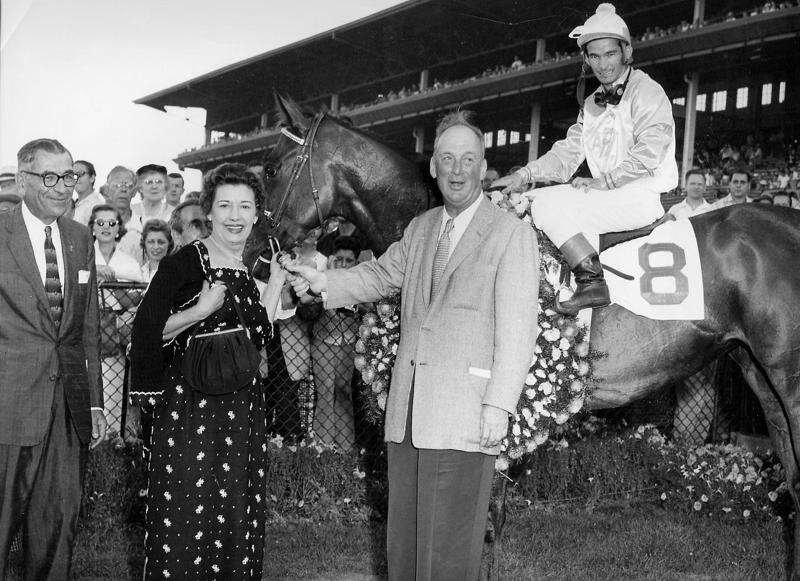
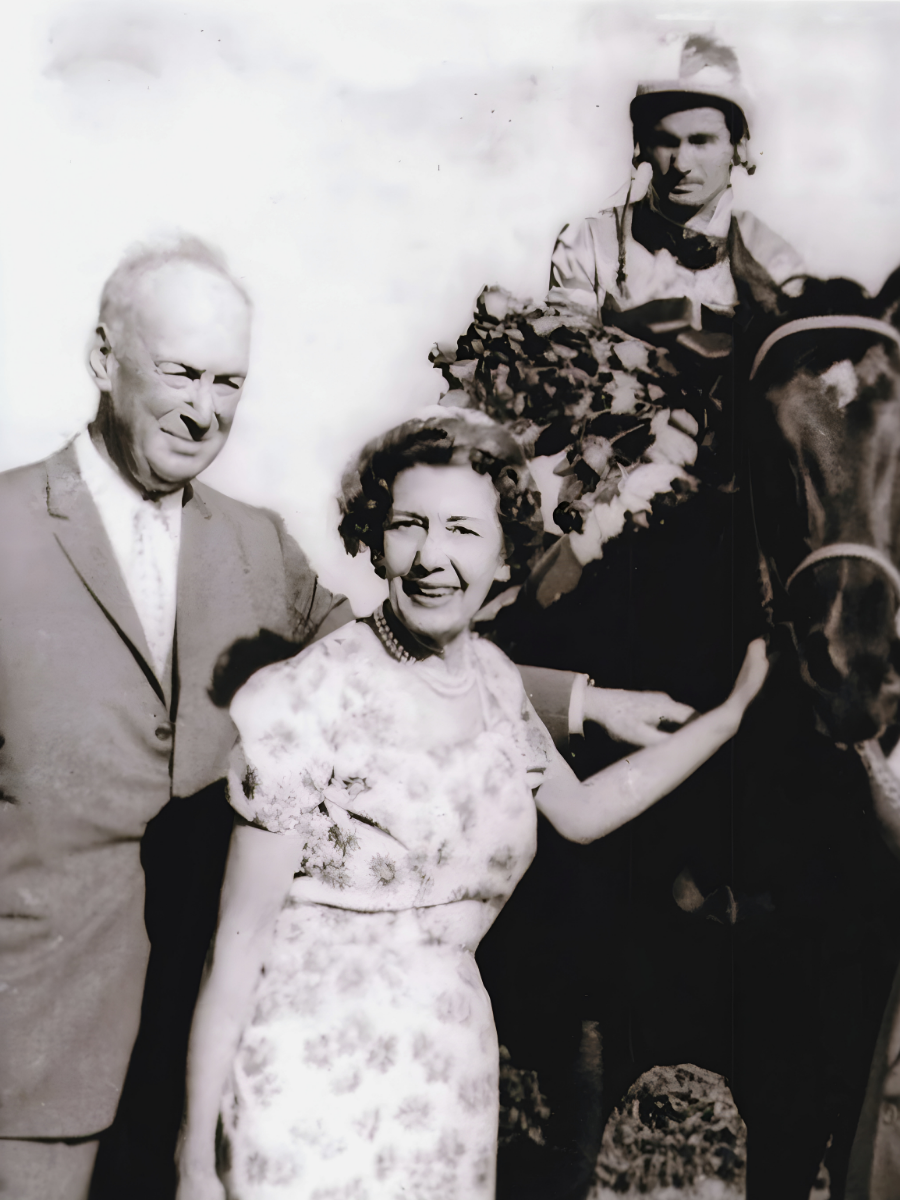
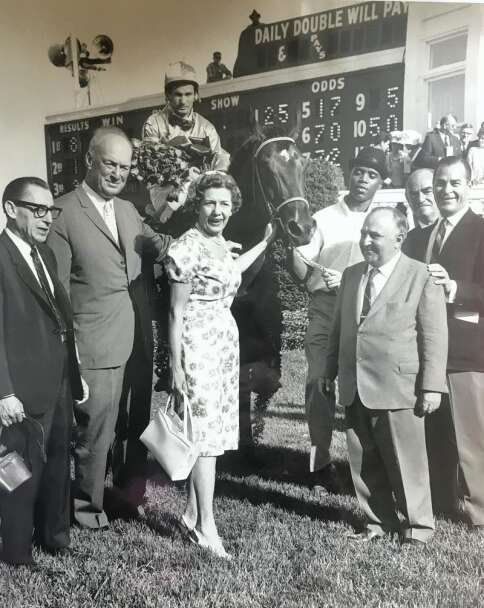
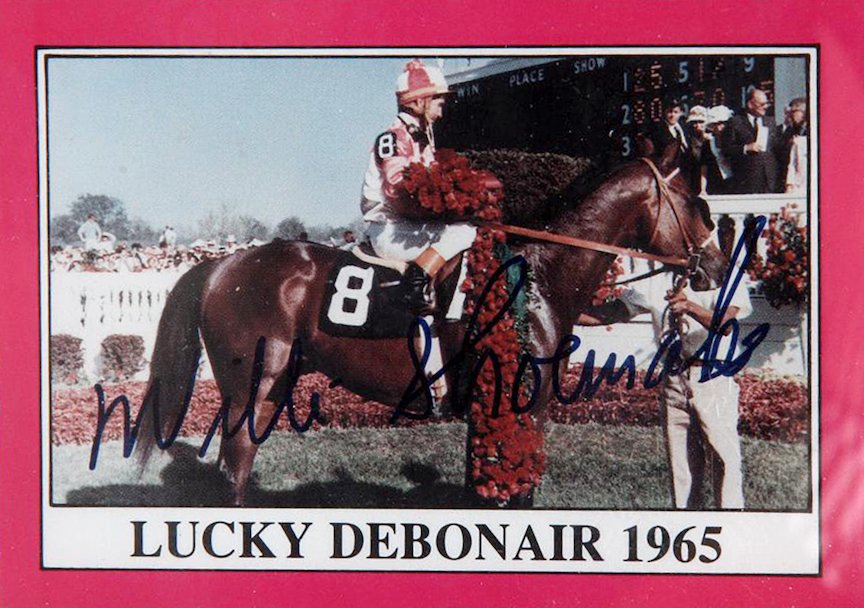
Mrs. Ada L. Rice sat in a folding chair in the receding pink light of a spring afternoon and remarked to friends that she was beginning to feel a letdown. For much of the day, she had experienced the anticipation and trepidations known to all who race horses, and then she had experienced the mountaintop feeling which is known only by the few. Mrs. Rice had won the Kentucky Derby, won it with a homebred, won it with a colt whose second dam she had purchased some years before. The triumph of Lucky Debonair in the 1965 Kentucky Derby was the pinnacle, but it was only one of many major triumphs for Mrs. Rice, who raced 42 stakes winners in three decades.
Cycles in racing demand that stables winning major stakes one day will have lean times the next, but Mrs. Rice’s Danada Farm stable was remarkably free of dry spells. The first stakes winners were Sirde, Model Cadet, and Mystery Lady, then there was a lapse of three years before Mr. Paradise won the Washington Park Futurity. Thereafter, only one year passed in which Mrs. Rice did not win a stakes, and in many years the Danada stakes winners came in groups, including six stakes winners in 1957, six in 1958, three in 1973, three in 1974, and so on. Lucky Debonair’s Derby was perhaps the biggest, but it was one among many.
From Draft Horses To Thoroughbreds
“My wife and I had been around horses for many years when we bought Danada Farm near Wheaton, Illinois, in 1929,” Mrs. Rice’s late husband, Dan Rice, once recalled. “We used to raise draft horses. I had known the late Ben Lindheimer in Chicago for a long time, and when he bought Arlington Park around 1940, I went in with him on the deal.”
In the summer of 1943, Mrs. Rice suggested it would be fun to race some horses, so her husband, a grain broker and stockbroker, purchased eight horses from Fasig-Tipton’s tent sale at Keeneland for her. Seven of them won. When the first victories came, Rice declined to accompany his wife to the winner’s circle, feeling it was her interest and activity and he would not interfere, but Mrs. Rice said she would not carry on the stable unless they could share the enjoyment. Rice later became closely connected to the management of Mrs. Rice’s stable and received daily reports on all of the racing and breeding stock of what became an extensive operation.
Major Danada Champions And Stakes Winners
The Rices’ first good horse was Snow Boots, which ran third in the Santa Anita Derby. Many notable runners followed, including:
- Cerise Reine, winner of the Delaware Oaks and Santa Margarita
- Pet Bully, winner of the Woodward and Washington Park
- Pucker Up, winner over Swoon’s Son and Find in the Washington Park Handicap and the champion mare of 1957
- Apatontheback, winner of the Fashion and Sorority
- Talent Show, earner of $507,038
- Chief of Chiefs, winner over Kelso in the Washington Park Handicap
- Delta Judge, winner of the Sapling
- Right Proud, winner of the Pimlico Futurity
- Lucky Debonair, winner of the Santa Anita Derby and Santa Anita Handicap in addition to the Kentucky Derby
- Pia Star, once holder of the world mile record and winner of the Suburban, Brooklyn, and Widener Handicaps
- Advocator, placed in the Kentucky Derby
Plus Ring King, Call Me Lucky, Rare Rice, Take Off, Lady Love, City Girl, Twogundan, and Roman Scout. Each of the stakes winners named above was also among the 45 added-money winners bred by Danada Farm.
Kentucky Danada And The Team Behind The Horses
In quest of the best horses, the Rices also sought out some of the best land and horsemen in the Thoroughbred world. They established Kentucky Danada, the main breeding division, on land once part of Col. E. R. Bradley’s fabled Idle Hour Stock Farm. Olin Gentry managed Danada for a time, and Howard Endicott managed it for some 20 years. On the track, Danada trainers included Tom Kelly, Carl Roles, Jim Conway, Clyde Troutt, and Frank Catrone, who held the post for the final twelve years.
Wins, Earnings, And Peak Years
Horses raced by Mrs. Rice won 883 races and earned $8,770,989 through 1974, and horses bred by her won 2,310 races and earned $13,155,650. In a sense, 1965 was the peak year, for it included not only Lucky Debonair’s Kentucky Derby, Santa Anita Derby, and Blue Grass, but also the smashing triumphs of Pia Star. Pia Star equaled the world mile record that year in the Equipoise, defeated Kelso, Roman Brother, and Quadrangle in the Brooklyn Handicap, and defeated Gun Bow and Affectionately in the Suburban.
Daily Racing Form statistics, however, show that the best year monetarily for Danada-breds came in 1973, when the horses earned $976,210. A statistics or “By the Numbers” page that charts Danada wins and earnings could be linked from here for visitors who want a more analytical view.
The Decision To Retire And Disperse The Stable
After three decades of success as a major Thoroughbred breeder and racing stable owner, Mrs. Rice decided the time had come to retire from the sport. “The ownership and management of an extensive stable is a considerable responsibility, and one which my late husband and I enjoyed together for many years,” she said in announcing her decision. “But the burden is too great for me to bear alone. I have therefore reluctantly decided to disperse my Thoroughbreds rather than see an enterprise in which we took such pride and pleasure suffer through my inability to devote to it the time and energy it requires.”
Naming The Thoroughbreds
Danada Farm was owned by Ada L. and Daniel F. Rice. They first entered the Thoroughbred business in 1943 when Ada told Dan that she would like to have a Thoroughbred to race. Mr. Rice purchased eight yearlings at Fasig-Tipton’s tent sales at Keeneland Race Track in Lexington, Kentucky. Seven of them won in their first year of racing. Mrs. Rice was hooked, and they formed the Ada L. Rice Racing Stables.
The responsibility of naming the horses was managed by Mrs. Rice, a duty she enjoyed and carried out with humor and creativity. Regarding naming, Mrs. Rice said: “Oh, you have to scratch for names. Like Lucky Debonair. I was trying to figure out how to get the brood-mare’s dam in the name… Airy. I just happened to think of it. One horse I named Apatontheback. They count letters and spaces, you can’t have more than 16 in a name, so I put ‘A pat on the back’ together into one word. It was accepted (by the Jockey Club).”
Pucker Up, a homegrown mare and Champion Handicap Mare for 1957, was named after her lip-curling habit. Others were named after friends and family, such as the 1963 colt Advocator, named after a friend who practiced law, and Win with Win, named after Judge Win Knoch. Twogundan was named after her husband, who enjoyed hunting on the Wheaton estate.
Her choice of Call Me Lucky was rejected by the Jockey Club because it was submitted simultaneously with the publication of Bing Crosby’s autobiography bearing the same title. Mrs. Rice wrote to Mr. Crosby, and the actor and singer, himself long interested in racing, gave her permission to use the name.
Besides naming the foals, she played with them in the paddocks and later cheered for them when they were racing. She rarely bet at the races. “I get nervous enough when we have a horse running,” she said. “Besides, you watch a race so much better if you don’t bet.”
Encouraged by the success of the first eight Thoroughbreds in the stable, the Rices became extensive buyers of high-priced stock, spending $439,300 at the Keeneland sales from 1947 through 1951 and acquiring private purchases totaling an additional $139,000. By 1951 Danada Farm Wheaton had seven homebreds in training. After 1951, the majority of Mrs. Rice’s horses in the racing stable were homebreds, foaled at the Kentucky or Illinois farms. A dedicated “Naming the Horses” or “Danada Homebreds” page can be linked from here to highlight this very personal part of the story.
Dispersal Sales: An Overview
“In liquidating her Thoroughbred holdings, Mrs. Ada L. Rice sold all but four of her horses at public auction. The stallions Lucky Debonair, Pia Star, Delta Judge, and Advocator were included in a confidential auction held November 10 at the Lexington offices of Fasig-Tipton Co. of Kentucky. Delta Judge and Advocator failed to meet their reserve prices; the former is owned by a syndicate in which Mrs. Rice holds two-thirds interest. Each of Mrs. Rice’s horses is a homebred, each won stakes in the 1960’s, and each previously stood at Mrs. Rice’s Lexington nursery (Danada Farm, which she has announced to sell).”
After the sale, Fasig-Tipton president John Finney placed the total value of Mrs. Rice’s stock at about $5.5 million. The Danada horses, stallion shares, and breeding rights sold at a confidential auction realized a gross of $3,254,400. The buyers of Lucky Debonair and Pia Star indicated that both stallions would be syndicated.
Belmont Park Sale, Elmont, New York
All breeding and racing stock owned by Ada L. Rice was dispersed in sales by the Fasig-Tipton Company in 1975. The first part of the sale was held on October 15, 1975, at Belmont Park in Elmont, New York. The Belmont sale saw 37 head sold for a gross amount of $1,284,500, an average of $34,716 per head. A timeline or “Danada Dispersal” page can be linked from here to lay out the 1975 sale events in chronological order.
Newton Paddocks Sale, Lexington, Kentucky
Excepting the four major stallions, the remainder of the stock was sold at Fasig-Tipton of Kentucky’s Newton Paddocks sale on November 8, 1975. That sale included three stallions (including Twogundan), 50 broodmares, 27 weanlings, and 23 yearlings. Three Danada-owned stallions, including Twogundan, were also sold at the November 8, 1975 sale. Their total gross sales figure is not known in the surviving archives.
Dispersal Of The Major Stallions
Lucky Debonair
“Lucky Debonair won the 1965 Kentucky and Santa Anita Derbys and the 1966 Santa Anita Handicap, and he was retired with earnings of $370,962. He was purchased by Amin Saidan and will be moved to Saidan’s Haras San Isidro near Caracas, Venezuela, for the 1976 season. A 13-year-old son of Vertex–Fresh as Fresh, by Count Fleet, Lucky Debonair is a half-brother to Top Flight Handicap winner Lady Love, which at $225,000 topped the Fasig-Tipton fall mixed sale at which Mrs. Rice’s breeding stock was sold. Lucky Debonair has sired nine added-money winners, including 1975 stakes winner Mr. Lucky Phoenix and Lucky Caper.”
Pia Star
“Pia Star, a major winner and earner of $306,240, was acquired by Jim and Pat Thompson and will stand next year at his new owners’ Ridgeway Farm near Hemet, Calif. A 14-year old, Pia Star (Olympia–Inquisitive, by Mahmoud) won the 1965 Suburban, Brooklyn, and Equipoise Mile Handicap and the 1966 Widener Handicap. His 10 stakes winners include Star Envoy, Impecunious, and Piamem, plus 1975 added-money winners Star of Kuwait, Charger’s Star, and Speedy Dakota (in France).”
Delta Judge And Advocator
“Delta Judge and Advocator will stand the 1976 season at Leslie Combs II’s Spendthrift Farm near Lexington. The syndicate ownership of Delta Judge will remain intact, Mrs. Rice’s 20 shares being used to sell breeding seasons. Advocator will be syndicated, with Mrs. Rice retaining a substantial interes according to Finney.
Sire of major winners Double Delta, Spout, and Eustace, Delta Judge is a 15-year-old son of Traffic Judge–Beautillion, by Noor. He won three stakes, including the 1964 Fall Highweight Handicap, and earned $159,762. He has sired a total of 18 stakes winners, including Judgable, Delta Sal, and 1975 added-money winners Spout (Alabama Stakes, gr. I), Eustace (Hopeful Stakes, gr. I), Nile Delta, Delta Oil, Red Cross, and Proud Delta. Delta Judge will stand at Spendthrift for a fee of $15,000 live foal.
Advocator, sire of 1975 stakes winner Kirrary, won the 1965 Cowdin Stakes, the 1967 Toboggan and Seminole Handicaps and Westchester Stakes, and the 1968 Sunrise Handicap. He placed in 14 other added-money events, including the 1966 Kentucky Derby and Belmont Stakes, and he earned $388,658. A 12-year-old son of Round Table–Delta Queen, by Bull Lea, Advocator has sired major winners Agitate and Just the Time, plus other stakes winners Copeton, Carry the Banner, and Clan Royal.”