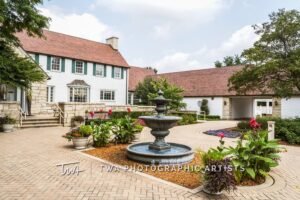
Danada Farm was owned by Ada L. and Dan F. Rice. They first entered the Thoroughbred business in 1943 when Ada told Dan that she would like to have a Thoroughbred to race. Mr. Rice purchased eight yearlings at Fasig-Tipton’s tent sales at Keeneland. Seven of them won. Well Mrs. Rice was hooked and they formed the Ada L. Rice Racing Stables.
The responsibility of naming the horses was managed by Mrs. Rice, a duty she enjoyed and displayed with humor and creativity. Regarding naming, Mrs. Rice said, “Oh, you have to scratch for names. Like Lucky Debonair. I was trying to figure out how to get the broodmare’s dam in the name… Airy. I just happened to think of it. One horse I named Apatontheback. They count letters and spaces, you can’t have more than 16 in a name, so I put ‘A pat on the back’ together into one word. It was accepted (by the Jockey Club).”
Pucker Up, champion Handicap Mare for 1957 was named after her lip curling habit. Others were named after friends and family, such as the 1963 colt Advocator named after a friend that practiced law, and Win with Win named after Judge Win Knoch. Of course, Twogundan was named after her husband that enjoyed hunting on the Wheaton estate. Her choice of Call Me Lucky was rejected by the Jockey Club because it was submitted simultaneously with the publication of Bing Crosby’s autobiography bearing the same title. Mrs. Rice wrote to Mr. Crosby, and the actor/singer, himself long interested in racing, gave her permission to use the name. Besides naming the foals, she played with them in the paddocks, and later cheered for them when they were racing. She rarely bet at the races. “I get nervous enough when we have a horse running,” she said. “Besides, you watch a race so much better if you don’t bet.” Encouraged by the success of the first eight thoroughbreds in the stable, the Rices became extensive buyers of high-priced stock, spending $439,300 at the Keeneland sales from 1947 through 1951, and acquiring private purchases totaling an additional $139,000. By 1951 Danada Farm Wheaton had seven homebreds in training. After 1951, the majority of Mrs. Rice’s horses in the racing stable were homebreds, foaled at the Kentucky or Illinois farms.